Five in the morning at the Ma Pi Leng Pass, northern Vietnam. Far below, the Nho Que River winds through the gorge as a turquoise ribbon; above you the sky is only just turning grey. You have maybe thirty seconds before the first light hits the ridgelines – and without thinking, you reach for the 16–35. Wide, ISO 100, f/8. Click. That's frame 217 of the roughly 5,000 still to come between Hanoi and Bangkok. The question isn't whether you'll bring home good pictures. It's whether you'll ever find them again.
Three weeks, three countries, two cameras, four lenses. Vietnam, Laos, Thailand. Mountains, rivers, rice terraces, temples, night markets – and somewhere in between a monkey that rips the mango out of your hand. Every day the pile grows. And every evening decides whether it ends up as an archive you can actually search, or a 300-gigabyte graveyard you never open again.
The same ritual every evening
It's the single most important move of the trip, and it takes less than ten minutes. Back at the guesthouse, mosquito net still drawn, you plug in the card reader – two cards from two bodies. Instead of dumping everything into one catch-all folder you won't be able to untangle in three weeks, FlashView handles the offload: Ctrl+I, pick a target folder, and the whole haul lands neatly in date subfolders – 2026-03-14, 2026-03-15, and so on. No renaming, no sorting by hand.
And the handful of shots you knew were keepers the moment you pressed the shutter, you flagged long ago out on the road – one tap of the Canon's rate button, five stars, straight in the camera. On your body the button is deliberately set to just two values: 0 or 5, nothing in between – enough for „this one's a hit". And because FlashView reads the rating as standard metadata straight from the file, exactly those five-star frames are already marked in the grid the moment the import finishes – without you touching them again.
Then the quick pass, that same evening, tired or not – the green curry from the street stall still burns, those Thai chilies you'll feel all the way into bed. Auto-advance (Caps Lock) on, arrow key held down, and anything that's obviously a dud – blurred, mis-focused, shutter too early – gets an X and is gone. Because FlashView shows the embedded JPEG from every RAW (why that changes everything), even 300 night shots fly past in minutes rather than half an hour of rendering. That way the pile never grows monstrous. Next morning the card is formatted and free again – and so is your head. The reason you can format it with a clear conscience is the import itself: every file is read back after copying and compared against the original by checksum. On the road that is often the only copy you have.
Pass by pass, lens by lens
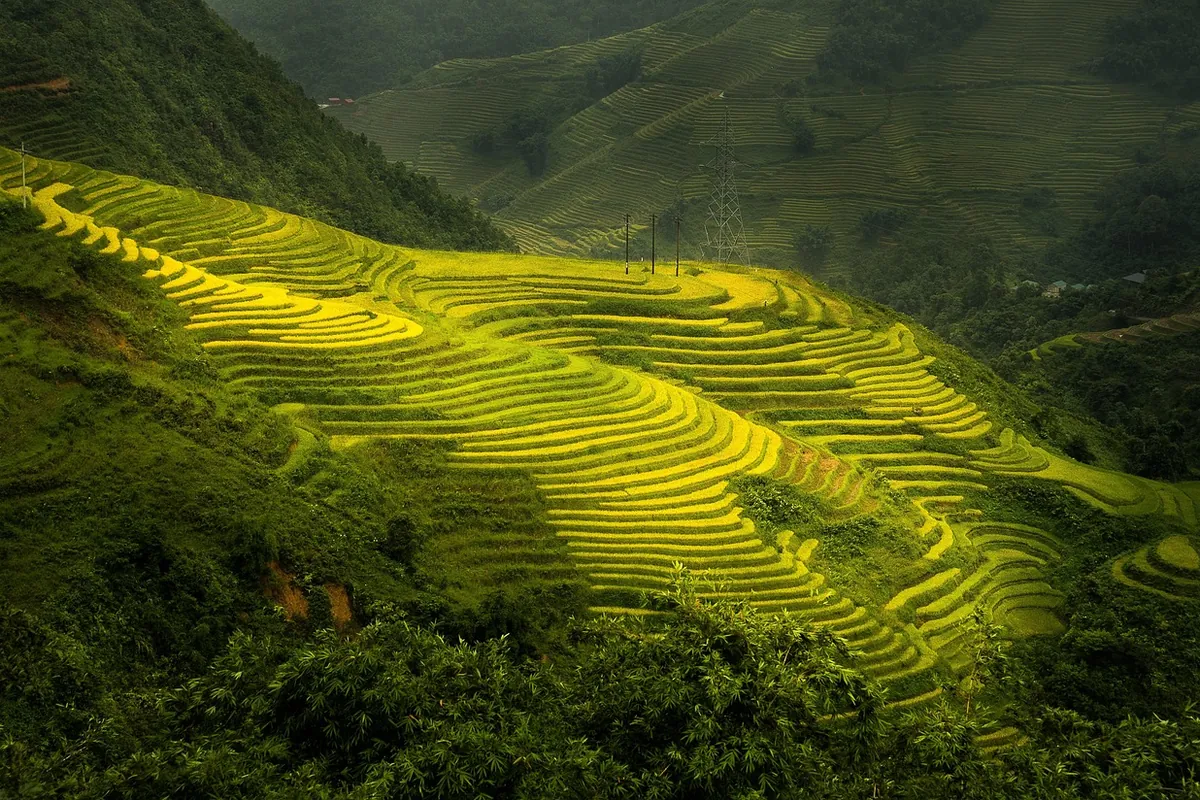
The road south is a chain of decisions, all made in half a second. In the rice terraces of Sa Pa you don't reach for the wide angle – it flattens the stepped fields into nothing. You take the 70–200 and compress the terraces into that rich, stacked green you came all this way for. A farmer in a conical hat, bent over the water, a buffalo beside her – 200 millimetres, wide open, background soft.
The next day, in Ninh Binh, everything is different. You're sitting in a rowboat a woman is paddling with her feet, karst cliffs rising out of the morning haze – and now every centimetre of width counts. Back to the 24–70, the standard zoom that's meant to do half the work on this trip. River, mist, a heron taking off.
Temples, lanterns and food on plastic stools
In Luang Prabang you stand by the road before sunrise, when the monks file past in saffron robes for the silent alms round. First the 16–35 for the whole line, the temple façade behind – then, without lowering the camera, a step back and the long end for a single face. Two completely different pictures, thirty seconds apart, two focal lengths.
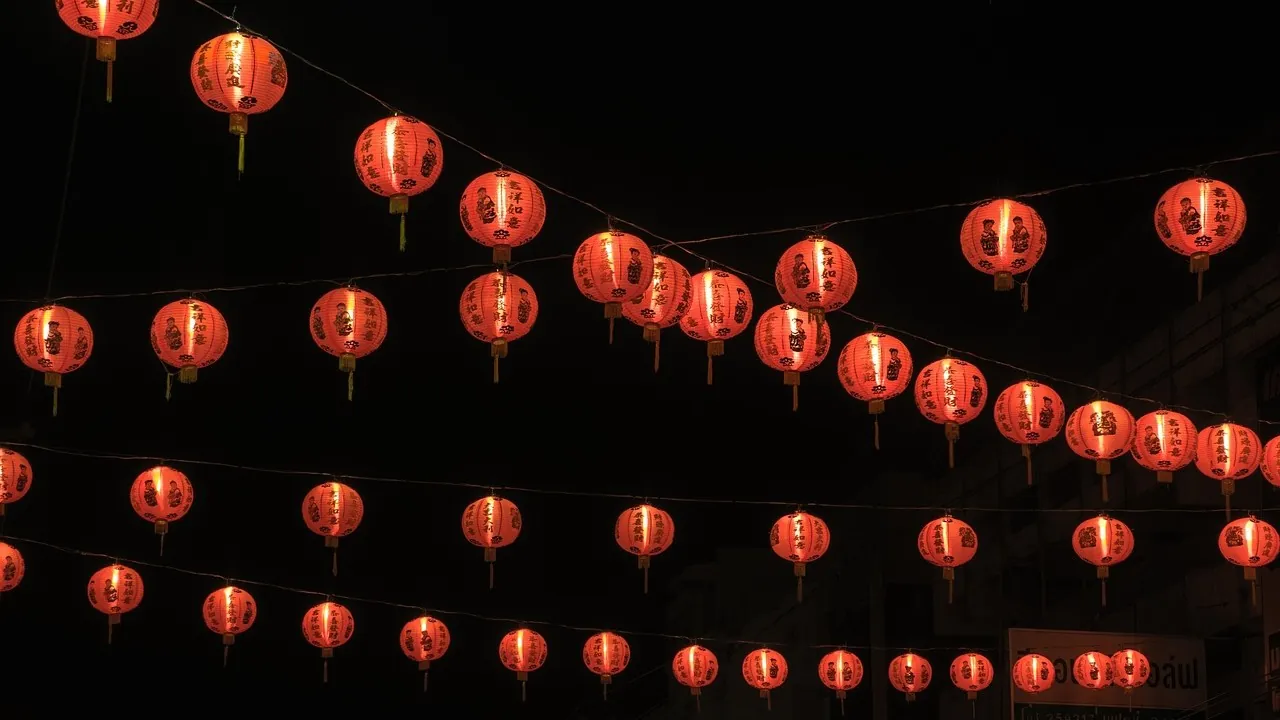
In the evening it turns loud and colourful. Hoi An's old town glows under a thousand silk lanterns; in Bangkok the fat hisses at the food stalls. No sunlight to lean on here: the 24–70 opens to f/2.8, ISO climbs to 6400, and you catch the red of the lanterns, the steam over the wok, the woman who has cooked the same noodle soup for thirty years. Low key, shallow depth of field, all mood. The best meal of the trip you eat on a bright red plastic stool, thirty centimetres off the ground – and you photograph it before you take the first bite. For dessert, mango sticky rice – the sticky grains fresh out of a bamboo tube, sweet and warm, drenched in coconut milk.

Bangkok: glass against neon
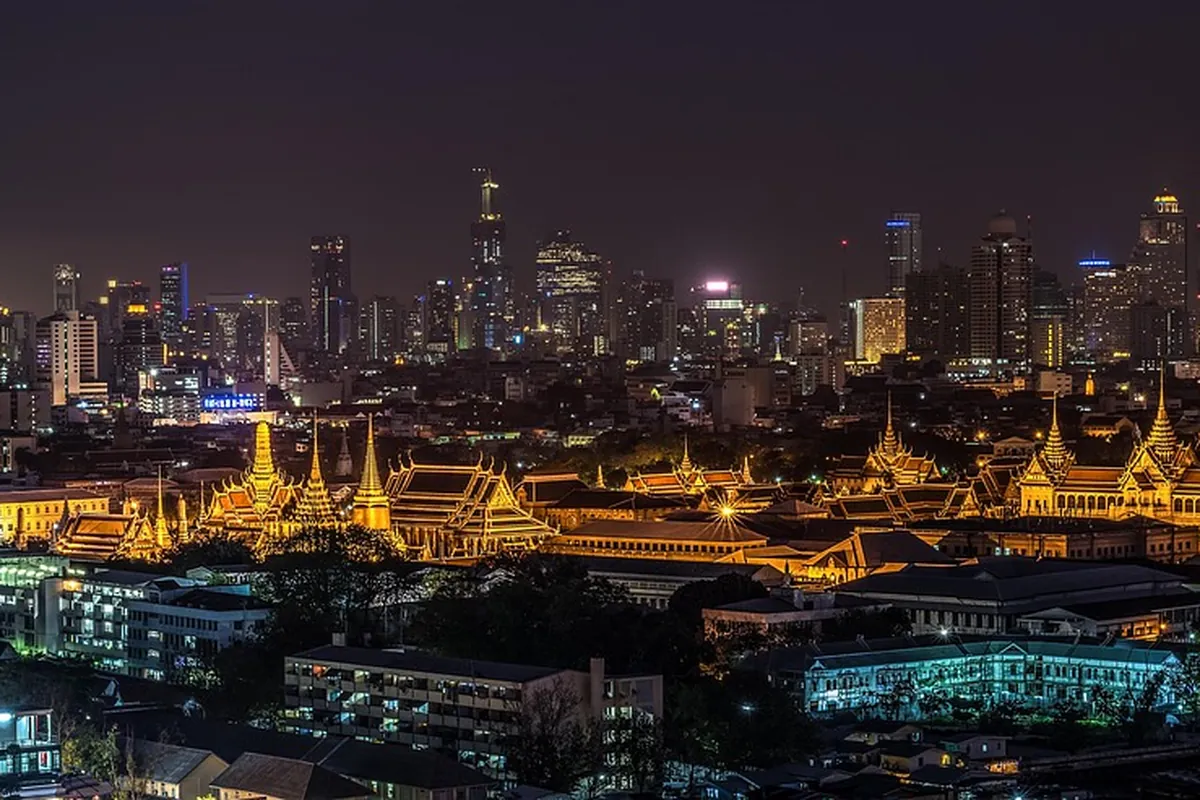
For the finale, the contrast that sums up the whole trip in one frame. In Bangkok you stand by the river at blue hour, glass towers stacking into the sky above you. Wide angle for the sheer scale, then the 70–200 to compress the towers into a single glowing wall – while down at the bank someone is still spooning noodles on a plastic stool.
On the way there, in Lopburi, you got the wildlife park nobody ordered: the macaques that have taken over the old Khmer ruin and shamelessly steal food straight out of every tourist's hand. Here the crop body with the 100–400 comes out, 1/2000 so the hand with the stolen bag stays sharp. You fire burst after burst – and end up with dozens of near-identical monkey frames. Back at the guesthouse, Compare earns its keep: with C you put them side by side two at a time, one as reference, the other active, and work through duel by duel until the one is left where the monkey stares you down instead of looking away.
Home. 5,000 pictures. Now what?
Three weeks later you're back. On the drive sit around 5,000 pictures in 21 tidy date folders – thanks to the evening ritual, the obvious rejects are long gone. The folders tell you what happened on day 14. But now comes the question most people trip over: you don't want to see „day 14". You want „all the temples". „All the animal shots". „The night markets". Subjects scattered across the whole trip, cutting through every folder. Somewhere in those 5,000 is the sunrise from the Ma Pi Leng Pass, too – but in which of the 21 folders?
The catalog route now would be: import everything into Lightroom, wait while 5,000 previews build, apply keywords you never applied on the road. An hour of toll before you see the first picture.
Slicing the archive by lens, focal length and ISO
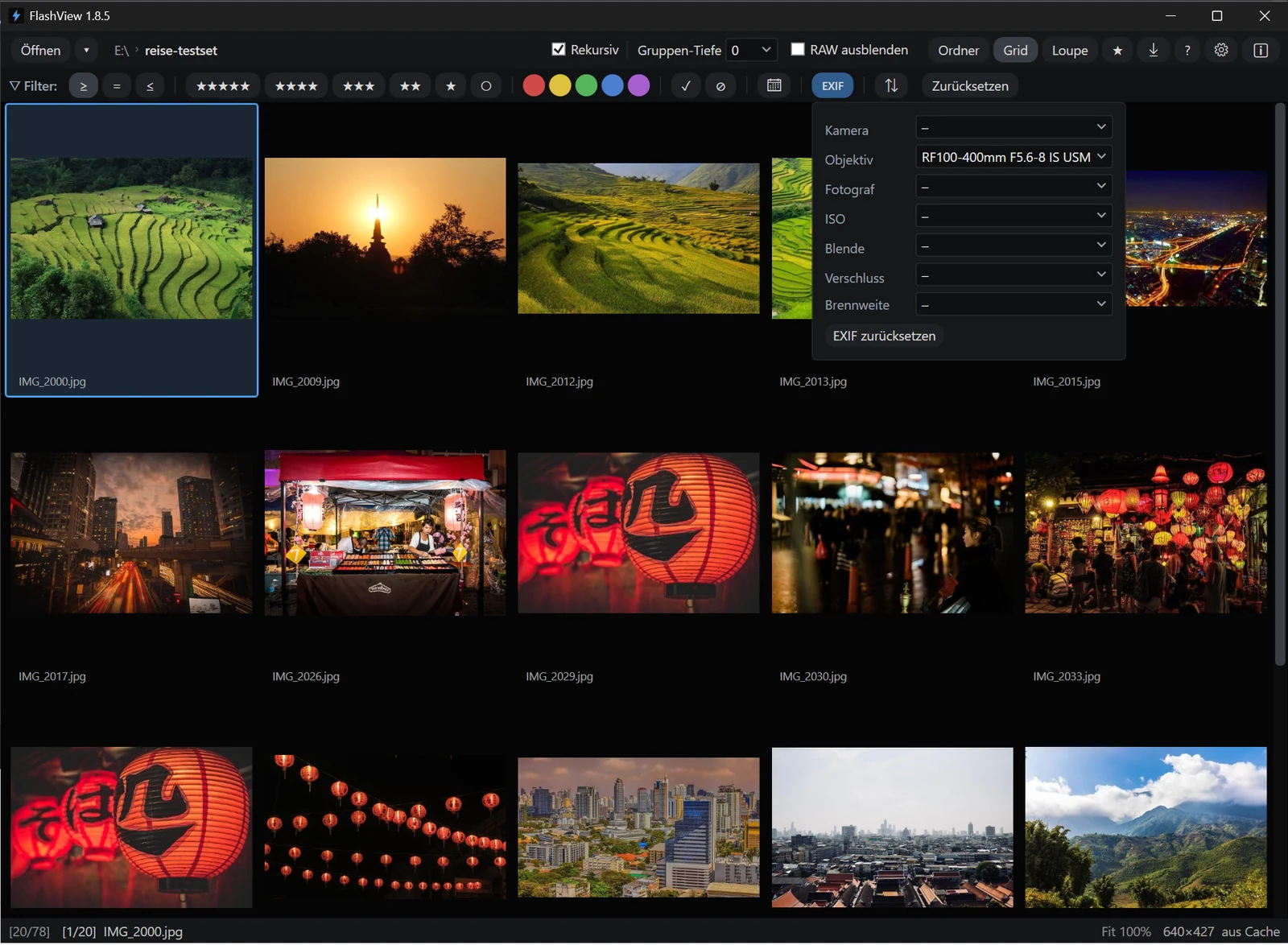
There's another way – and without an import. One switch in the settings: EXIF sort & filter. In the background, FlashView reads what's already in every file: camera, lens, focal length, ISO, capture date. No speed cost, just a little more cache – which is why it's optional and off by default.
Now you open not one folder but the entire trip directory, recursively – all 21 days at once, all 5,000 pictures in one fluid view. And then you cut across:
- All the landscapes? Filter to the 16–35, ISO up to 200 – there are your mountain panoramas, from Ha Giang to Doi Inthanon, whatever day they were shot.
- The animal shots? Filter to the 100–400 – the monkeys, the herons, everything that needed reach, in one go.
- The night markets? Filter to ISO 3200 and up – lanterns, food stalls, temples after dark.
- The rice terraces? Focal length 70–200 – the compressed greens from Sa Pa and Pai.
And running across all of it is your five-star trail from the road: filter to 5 stars, combined with the 100–400, and one click gives you the outright wildlife hits – the ones you already flagged in the camera.
 Short · YouTube
From 23,000 photos down to 341
Watch video →
Short · YouTube
From 23,000 photos down to 341
Watch video →
This runs recursively across the whole archive, locally, instantly – even if it were not 5,000 but 100,000 pictures. Exactly where a catalog tool starts to sweat, FlashView is still fluid. (In depth, why that holds: the wildlife workflow.)
What the archive tells you about yourself
And then you do something that surprises you: you go through the archive focal length by focal length – filter to 16–35, glance at the hit count, then 70–200, then 100–400. Suddenly it's there in black and white, how you really shoot. The 70–200 delivered two thirds of the keepers – the terraces, the monks, the towers. The heavy 24–70 barely left the bag. The 100–400 that wrecked your shoulder for days was used for exactly eleven pictures – but three of them are the best of the trip.
That's not a gimmick. It's the answer to the question you ask yourself before every trip: what do I even pack? Next time maybe the 24–70 stays home – and a light 35 comes along.
What finally goes out
Now it all makes sense. From each subject cut you pick the best, and with Ctrl+E FlashView exports the selection as finished JPEGs into a folder – a „best of Southeast Asia" for Instagram, a second set for print, a third for the family. No catalog, no detour. The 5,000 raw files stay tidy in the date archive, for the day you do go looking for that one shot from day 9.
Half a year later you find, in seconds, what you shot that morning at the Ma Pi Leng Pass – not because you dutifully tagged everything on the road, but because the picture describes itself: 16–35, ISO 100, 14 March, just after five. The trip lives on because you can find it again.
If you'd like to try FlashView for it, you'll find it at flashview.net.