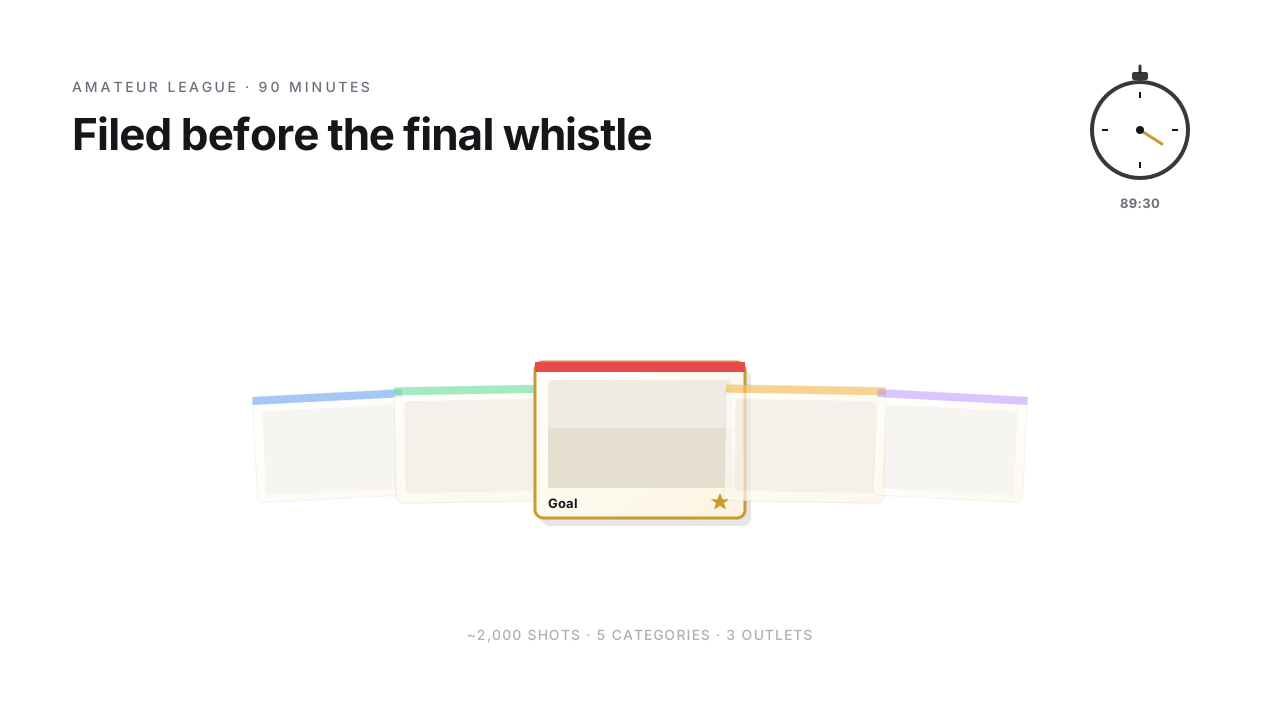
Amateur league derby, 90 minutes plus stoppage time. You're at the sideline, long lens, burst mode. At the final whistle the card shows 2,000 shots. The club committee wants a dozen images for the club magazine and a goal snapshot for the local newspaper – by tomorrow morning. You drive home and think: now the second half of the day begins.
Anyone who shoots amateur sports knows this evening.
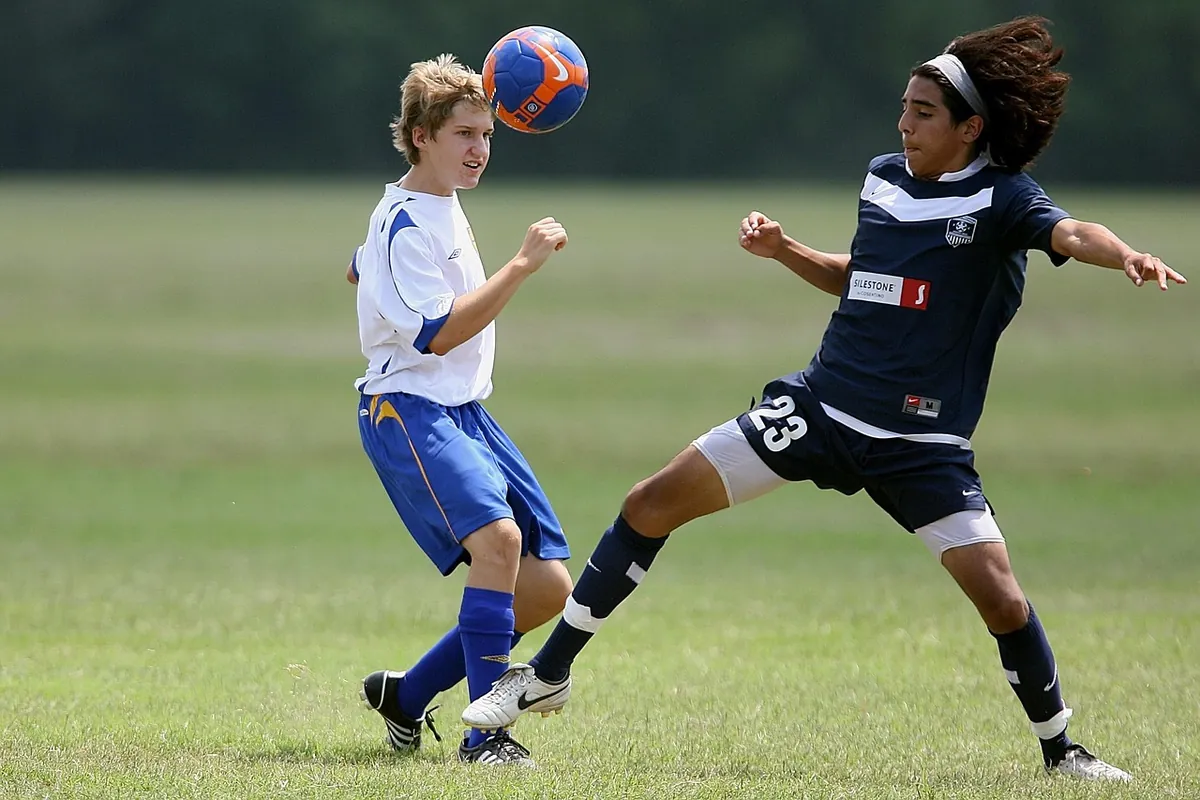
What sport brings to the workflow
- High frame rates, huge bursts. Modern cameras shoot 20–30 frames per second. A 3-second action lands as a burst of 60–90 shots on the card. Over 90 minutes that easily adds up to 1,500–3,000 images.
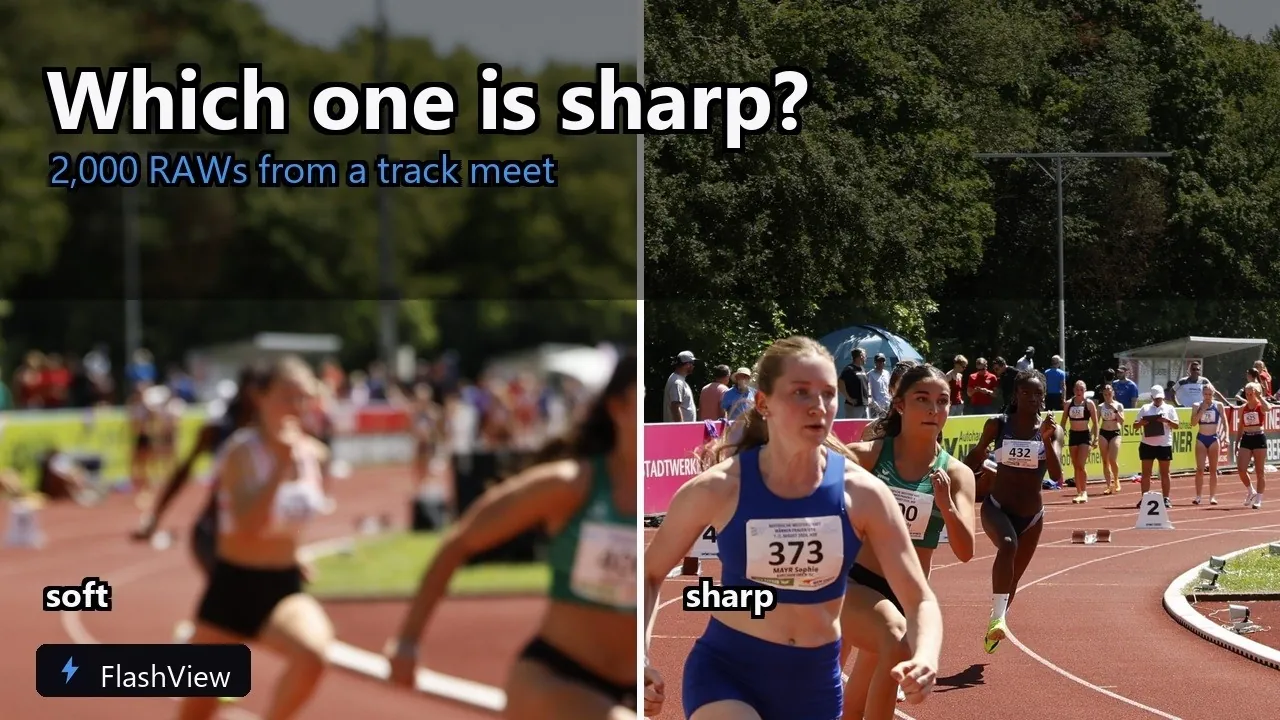
- The moment matters, not just sharpness. AI subject tracking in modern cameras already makes 20–25% of the burst sharp – the question isn't "which one is sharp" anymore, it's "which one captures the moment best".
- Delivery pressure in hours, not days. Online editorial wants tonight, print local newspaper tomorrow morning, club magazine within days.
- Structured by action. Not by stages or settings – by goal, save, foul, celebration, coach reaction.
- Multiple recipients, different selections. The club wants a broad gallery, local press the highlights, online versus print sometimes different images.
Culling in 1–2 stages
At home you slot the card into the reader – FlashView reads it itself and drops the 2,000 frames into a folder, no copying by hand. At this volume the culling runs tight and decisive.
Stage 1 – Rough culling (2,000 → ~600). Arrow keys hot, X for reject. Anything obviously out of focus or wrongly focused, anything that missed the moment (player has already passed, ball out of frame), anything where a directly better variant exists in the burst – all out. Doable with FlashView in 20–30 minutes. In the bulk pass you turn on auto-advance (Caps Lock) – FlashView moves on by itself after each rating, so you rate straight through in the rhythm of the burst; Ctrl+Z undoes a misfire.
Stage 2 – Selection per action (~600 → ~80–120). Mark the best variant per moment. With two almost equal frames from a goal sequence you put them side by side with C and decide on the expression rather than gut feeling. To check focus on a face, zoom in once and turn on "Lock zoom" via right-click: every frame of the burst then shows the same spot at the same magnification, and you see at a glance where the autofocus landed. This is where the color system comes in.
Categorization instead of a global ranking
Not every image is relevant for every recipient. Color labels in FlashView split the material directly by usage:
- Red for shots and celebrations (shot, finish, goal celebration)
- Blue for saves and defensive actions
- Green for game action (tackles, passes, sprints)
- Yellow for atmosphere and emotion (cheers, frustration, benches, coaches)
- Purple for special shots (lineup, team photo, final whistle, referee scenes)
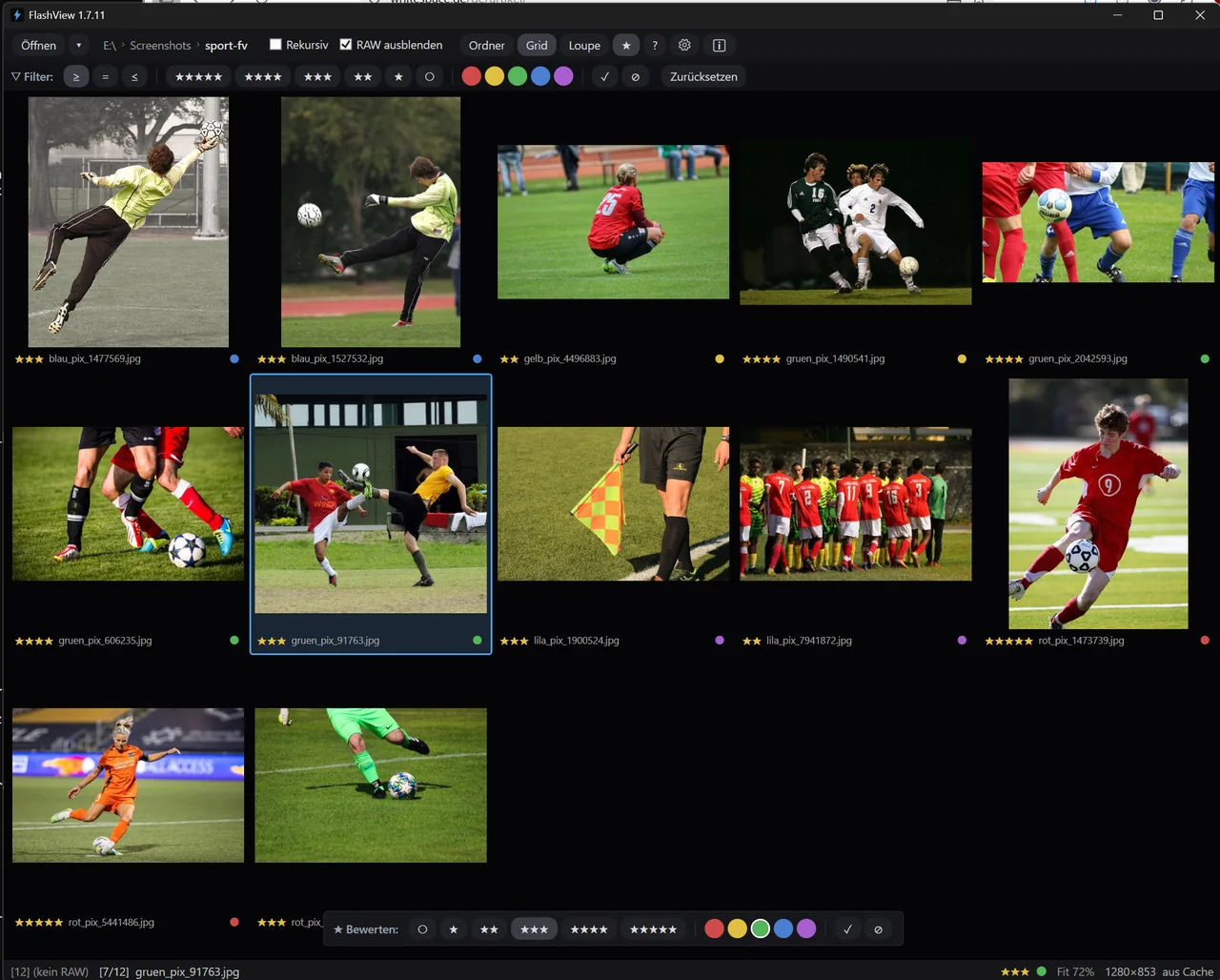
After stage 2 you filter by color and pack each delivery: goal shots for the online local press (red), highlights for the print local newspaper (red + blue + the strongest from yellow/purple), the complete gallery for the club (everything together). Filter red, export with Ctrl+E as finished JPEGs into the Online Press folder – the three deliveries drop out as separate packages, without a detour through a catalog.
Three recipients, three delivery speeds
- Online local press – usually 1–3 goal shots still on match night. Quickly edited, brief captions. Window: 2–4 hours after the final whistle.
- Print local newspaper – 5–10 images by the next morning. Mood shots and format-fitting landscape or portrait orientations matter here too. Window: by noon the following day.
- Club – complete gallery of 60–120 images over the next few days. For the club magazine, social media, website. Window: 2–5 days.
Split this in one culling pass and you've prepared all three deliveries without going through the material three times.
What AI tracking changes in the workflow
Brief note on hardware: modern cameras (R5/R7, A1/A6700, Z6III) bring AI subject tracking. Where five years ago maybe 5% of a 30-frame burst was consistently sharp, today it's 20–25%. That shifts the culling focus: less "is anything sharp at all", more "which variant captures the motion best". With older cameras the workflow stays the same, just with a lower hit rate per burst.
What's left
Match evening, final whistle plus three hours. The goal shots are with the online editorial team, the print selection is ready for tomorrow morning, the club package you can finish next weekend.
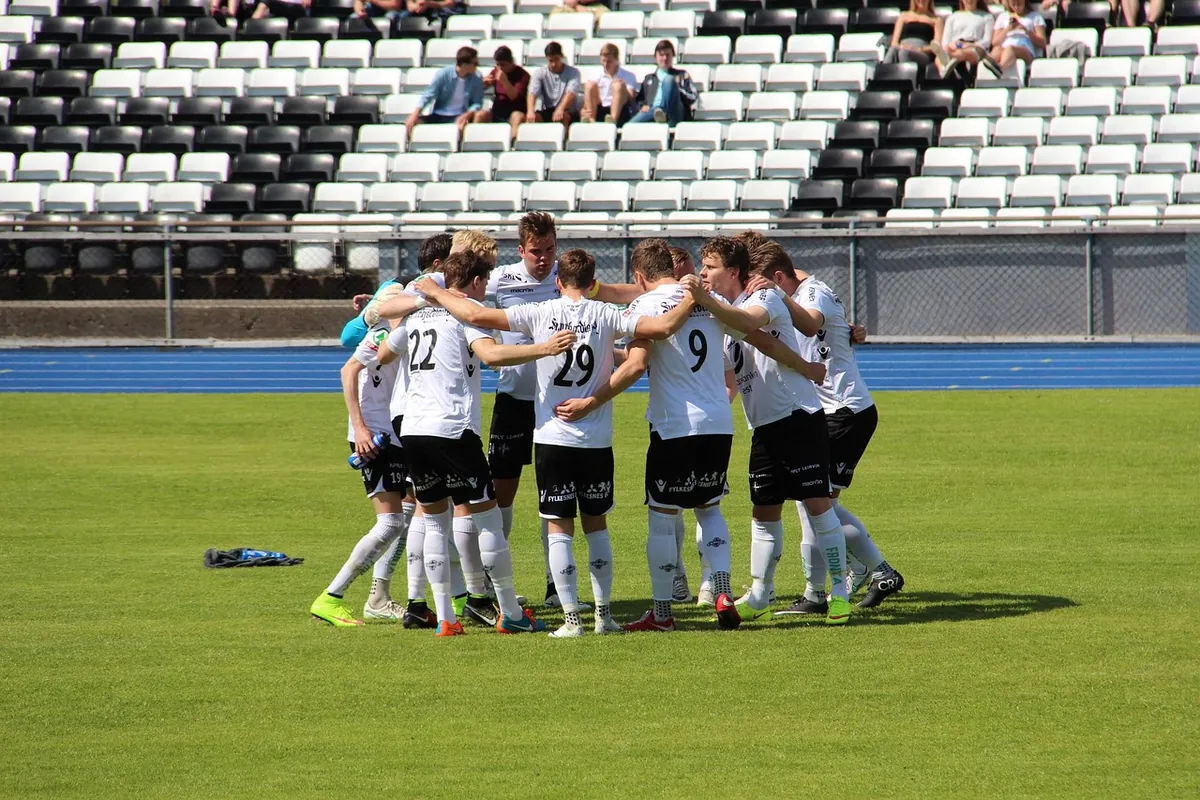
Three deliveries from one culling pass – when the workflow is set up right.
If you'd like to try FlashView for rating and categorizing, it's at flashview.net.